Language does more than describe a problem. It influences how we understand it, discuss it, measure it, and respond to it.
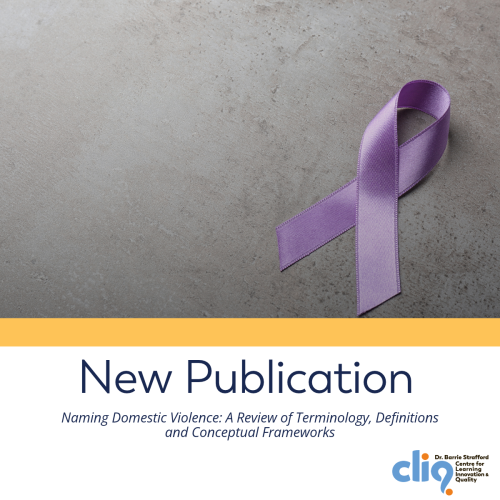
The Dr. Barrie Strafford Centre for Learning, Innovation, and Quality is pleased to share the publication of Naming Domestic Violence: A Review of Terminology, Definitions and Conceptual Frameworks, a resource that examines the terminology used to describe domestic violence and explores the implications of language for policy, research, service delivery, and public understanding.
As conversations surrounding violence prevention continue to evolve, so too has the language used to describe these experiences. Terms such as domestic violence, family violence, intimate partner violence, and gender-based violence are often used interchangeably, yet each carries distinct meanings, assumptions, and policy implications. Understanding these differences is essential to building a shared foundation for research, practice, and action.
The review highlights the important role language plays in shaping how domestic violence is understood, discussed, and addressed. The terminology used can influence public awareness, service delivery, research, and policy by emphasizing different relationships, contexts, and experiences of violence. The literature also found that no single term fully captures the range of experiences and forms of harm that may occur, making the choice of language highly dependent on context, purpose, and audience. Importantly, terminology has real-world implications for legislation, funding, data collection, and support services, influencing who is recognized, counted, and supported. Across the literature, a consistent theme emerged: language should remain grounded in survivor experiences, reflecting the diverse realities of those affected while supporting accessibility, inclusivity, and meaningful engagement.
Ultimately, establishing a shared understanding of terminology is more than a matter of semantics. It is a critical step toward strengthening research, informing policy, improving service delivery, and fostering meaningful collaboration across sectors. By examining how domestic violence is defined and discussed, this review contributes to ongoing conversations about prevention, intervention, and systems change.
As Alberta recognizes Family Violence Prevention Month, we invite researchers, policymakers, practitioners, and community organizations to explore the findings and consider how language can help shape more effective and inclusive responses to domestic violence. By strengthening our shared understanding, we can support more informed dialogue, collaboration, and action to prevent violence and promote safer communities.
Read the article here.
.png)


.jpg)
.png)
.jpg)
.png)


.png)

.jpg)

.jpg)
.jpg)

.jpg)
.jpg)
.png)

.png)
.jpg)
.png)
.png)
.png)



.jpg)
.png)
.png)


.png)



.jpg)